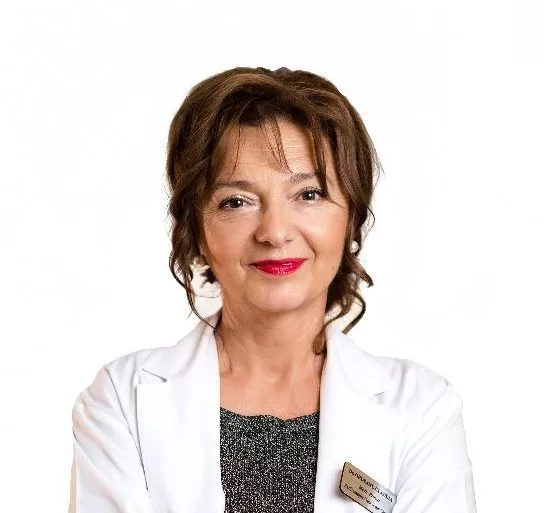
You can schedule an online consultation with Dr. Claudia Ordeanu here: Consult Dr. Claudia Ordeanu
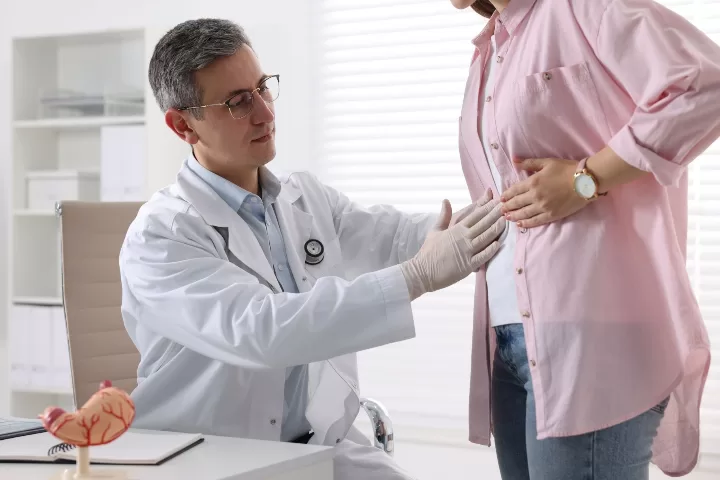
Specialists are sounding the alarm: more and more patients are being diagnosed with serious gynecological conditions! Many of these could be prevented, so regular examinations are vital. Dr. Claudia Ordeanu, chief radiation oncologist and medical oncologist at the Oncological Institute “Prof. Dr. Ion Chiricu??” explained the importance of prevention, as well as the challenges in treating gynecological tumors in an interview for Digital Clinics. Dr. Ordeanu also provides online consultations on the telemedicine platform.
How important are annual examinations to prevent the occurrence of serious gynecological conditions?
Cervical cancer, according to Globocan data from 2020, has an incidence of 13.3%000 worldwide. In Romania, the incidence is 22.6%000, our country ranking 3rd in terms of cancer in women, after breast and colorectal. In Europe, we are 1st in terms of incidence and mortality caused by cervical cancer. Faced with this sad reality, I believe that the role and importance of performing the Pap smear must be constantly emphasized. It is a simple, painless investigation that, if performed regularly, would save thousands of lives.
What set of investigations do you recommend to your patients and starting at what age?
Regarding gynecological cancers, the most important recommended investigations are the Pap smear, HPV testing and specific tumor markers.
If in the past a gynecological consultation was recommended annually along with the Pap smear, in recent years we have learned a lot about the main cause of gynecological cancers, which led to the new recommendations:
- Between 21-29 years: performing a cytological examination every 3 years
- Between 30-65 years: performing a cytological examination together with HPV testing at an interval of 5 years. If a cytological examination without HPV testing is desired, the recommended interval is 3 years.
What should be emphasized is that early onset of sexual life, multiple partners and smoking increase the risk of developing cervical cancer.
Tumor marker testing is done upon recommendation of the family doctor or following a gynecological consultation that raises some suspicions.
What are the biggest challenges posed by the treatment of gynecological tumors, especially those in advanced stages?
The treatment of gynecological tumors is multidisciplinary, involving radio-chemotherapy, brachytherapy and surgery. The association of different types of treatment depends on the histological type, stage and extension of the disease.
The first challenge in the treatment of advanced stages is the patient's acceptance of the situation they are facing, which they must face and the indicated treatment. Thus, the support of family, friends and specialized medical professionals comes to the aid of us, all of us, who are fighting this disease.
The sometimes altered general condition, anemia, associated diseases, all represent daily challenges in the treatment of our patients, to which are added the side effects due to treatments.
How many of these serious cases could be prevented and how?
In Romania, cervical cancer kills 2,000 women every year. It can be detected in very early stages through a simple Babeș-Papanicolau test. The definite existence of a correlation between cervical cancer and the HPV virus has been proven.
Medical education, prevention could reduce the incidence of advanced stages by a very high percentage. Success lies in the anti-HPV vaccination. The nonavalent vaccine is included in the National Immunization Calendar and is free for girls in the age group of 11-14 years. At the request of parents, family doctors can vaccinate young women over this age.
Correct information provided by authorized persons, from schools, the media and online, I believe is an important weapon in the common fight we are waging against this disease.
What do we need to know about radiotherapy?
I would like to emphasize that radiotherapy plays a major role in the treatment of gynecological tumors. If in the case of uterine cancer, surgery is the “cornerstone”, in cervical cancer, starting from stage IB2, the treatment can be exclusively radiochemotherapy and brachytherapy.
Currently, modern IMRT/VMAT radiotherapy techniques and Helical Tomotherapy (available to patients treated at the “Prof.Dr. Ion Chiricu??” Oncology Institute in Cluj-Napoca) offer the possibility of administering curative doses at the level of the tumor volume through personalized treatments, with the protection of healthy organs, respectively reducing the toxicities associated with radiotherapy.
Since 2021, our patients with gynecological cancers have benefited from treatments at the highest European standards, according to international guidelines, namely external radiotherapy using the VMAT/Helical Tomotherapy technique and image-guided interstitial brachytherapy.
We are the only center in the country that offers patients free interstitial brachytherapy under anesthesia, performed in the operating room, guided by MRI/CT imaging.
We are also the only center in Romania that uses inhalation sedation for brachytherapy applications. The effect begins a few minutes after administration and disappears within 5-10 minutes.
Starting this fall, our patients will benefit from access to the fourth medical linear accelerator, which will also offer the possibility of anesthesia for performing treatments.
What are the most common conditions of your patients?
Of the total number of gynecological cancer cases treated at our Institute, 45.3% represent cervical cancer, 31.5% uterine body cancer (endometrium), 19.7% ovarian cancer, and 3.5% other locations (vulva and vagina).
Approximately 19% of all new cases registered at the “Prof.Dr. Ion Chiricu??” Oncology Institute in Cluj-Napoca are gynecological cancers.
Unfortunately, most of my patients present in advanced loco-regional stages, hence, I emphasize once again the importance of prevention, namely starting medical education while still in school.
You can schedule an online consultation with Dr. Claudia Ordeanu here: Consult Dr. Claudia Ordeanu