You can schedule a consultation with a deratologist here.
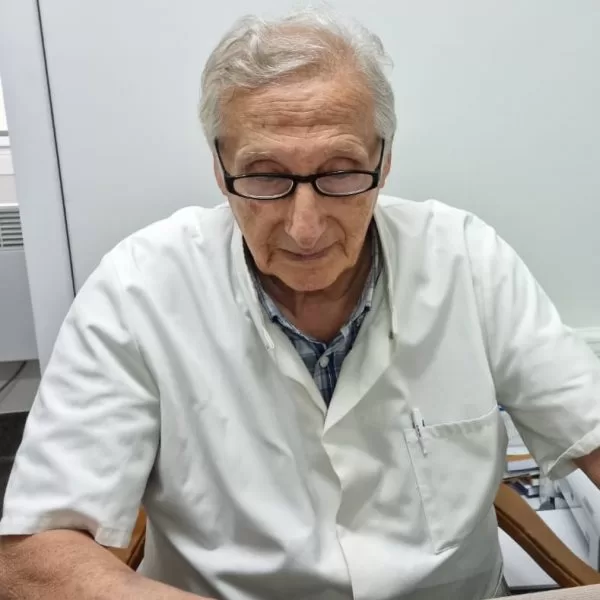
We talked to Dr. Petru Du?escu, primary physician at the Military Hospital in Foc?ani, with over 40 years of experience in dermatology, about the most common conditions encountered in a dermatological office, their treatments and the importance of seeing a doctor in an early stage of any disease. In the opinion of the doctor who provides consultations on the Digital Clinics platform, the three most common dermatological conditions are: varicose veins, atopic dermatitis and psoriasis.
Varicose disease and its complication - leg ulcers
Varicose disease, or varicose veins as they are popularly called, appear on a family basis and, if this genetic predisposition is added to the fact that the person stands a lot, the appearance of varicose veins is certain. Most of the time, people pay attention to this condition and see a doctor immediately after their appearance to start a conservative treatment - elastic stockings worn during the day when they stand, etc. Also, movement, like walking, helps a lot, especially in the initial phase of the appearance of varicose veins, because when we walk, muscle contraction intensifies blood circulation, so walking/sports activities prevent the development or worsening of varicose veins.
In the early phase, there are both local treatments with various ointments and with tablets for internal use that improve or stagnate the development of this condition. It is also possible to cure varicose veins through surgery under endoscopic control, that is, by inserting a probe into the veins with the help of which the surgeon extracts the varicose portions. However, if the operation is not done well, relapses occur quickly, after a year and a half, two. One such type of treatment is sclerotherapy, which makes the veins stiffen, and then the blood will circulate from the bottom up much more easily.
However, if the patient does not see a doctor at an initial stage, varicose veins progress until the veins become turgid, hardened and complete treatment to heal and bring the skin to perfect aesthetic parameters is no longer possible.
Some people do not pay attention to the appearance of varicose veins, especially men who do not have aesthetic complexes, and the veins end up becoming very dilated. Over time the unpleasant sensation of heaviness in the legs, or even pain, appears and this is usually the moment when the patient turns to the doctor. But if even at this point the patient does not see a doctor, any small blow can cause a leg ulcer. There are people who also postpone the treatment of a leg ulcer, people who do not even come to the doctor at this stage and treat themselves with ointments, various herbs and end up with large ulcers, which become infected, cause erythema, temperature and then the treatment is much more complicated.
In conclusion, as with any medical condition, the earlier a patient presents to a doctor, the greater the chances that the disease will be easily and completely cured.
Atopic dermatitis
It is an immuno-allergic disease and represents an atypical, curious response of the body. It represents an inflammatory skin condition, which creates an intense sensation of itching. During life, atopic dermatitis disappears on its own most of the time. It occurs more frequently in children and heals on its own: if it appears before 2 years of age, it heals by 6 years of age, if it appears between 2 and 6 years of age, it heals around 10 years of age, and if it appears after 10 years of age, it generally heals by 12 years of age.
However, mothers of children with dermatitis are very affected because this disease begins with small bumps on the palms and soles, the mother panics because she looks on the internet where a lot of meaningless things are written and starts treating the child according to the advice found online. Later, when she reaches the doctor, it is a struggle to convince the mother that atopic dermatitis does not leave marks, that it does not attack internal organs, that it is not transmitted to other children. In the acute phase, external treatments are recommended that make the itching disappear. Sometimes if atopic dermatitis does not heal even at 12-14 years old, the child can develop various eczemas, dermatitis that evolve a little more severely but there are treatments there too.
As a result, I recommend that mothers with children who develop this symptomatology come to the doctor immediately and not search for miracle recipes on Google for months. Also, the anxiety of mothers who see that the child's condition is not healing is transmitted to the child and, sometimes, the child is more affected by the mother's anxiety than by the disease itself.
Psoriasis
It occurs in approximately 1.5 - 2% of the population and, unfortunately, the disease is aesthetically disabling, especially when skin lesions appear on exposed parts of the body. Psoriasis has increased its incidence especially during the pandemic, because workplaces, lifestyles have been affected and as a result stress has increased. Although it is a genetic disease, in my experience, in 95-96% of psoriasis patients, stress was the activator of the genes that cause the appearance of psoriasis.
In a consultation, my first question to a patient with psoriasis is: "When did your psoriasis appear and when did you have major stress?" If the stress is a singular one and is a thing of the past, I do not send them to a psychologist, but if the patient has constant stress at work or at home, I suggest they consult a psychologist. I even had a case where psoriasis was not visible at all for 15 years and later, due to a terrible shock, the patient went directly to immunological treatment.
Psoriasis in the early stages can be controlled with ointments that need to be changed monthly, and if the lesions are few and the stress decreases, there may be periods when patients do not have any skin lesions. Psoriasis can also be cured when it is advanced, generalized.
How would an online consultation on Digital Clinics with you work?
Before the consultation begins, patients can upload their analyzes, laboratory investigations, and previous treatments to the platform, which I can analyze during the video consultation. Then, during the 20-minute consultation, I can see certain dermatological lesions of the patient, analyze the treatment they are following or have followed, and prescribe other investigations or fill in a medical prescription. I have also treated patients from other countries via telemedicine, with efficiency and very good results.
You can schedule a consultation with Dr. Petru Duțescu here.