You can schedule an online consultation with Dr. Daniela Onu, here.
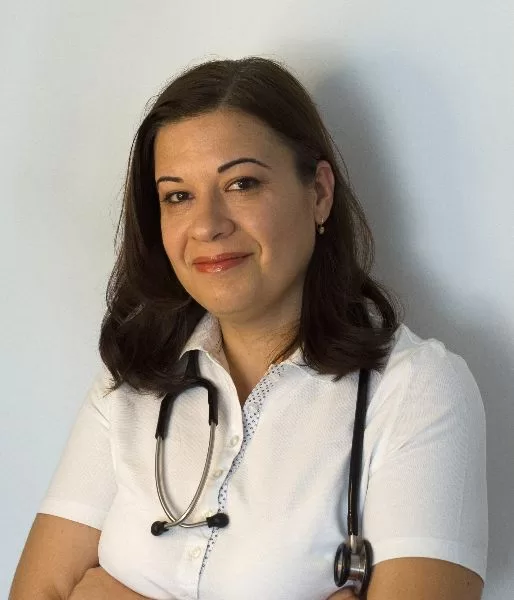
We decide that we want a figure worthy of admiration, but we think that a diet followed loosely can destroy our health? Nutritionists tell us: beware of online fad diets. Dr. Daniela Onu, a diabetes and nutrition specialist with 10 years of experience in Germany, explained in detail, in an interview for Digital Clinics, how dangerous these weight loss diets are if they are carried out without the supervision of a specialist, how important proper nutrition is and why prevention is vital.
It is said that we, Romanians, eat "a lot and badly" and this is where many health problems come from. What are the main dietary mistakes that we make?
Indeed, we eat a lot and do not choose quality, healthy products. In recent years, we have noticed an alarming increase in the number of overweight and obese children and adolescents. It is a sad thing, people have misunderstood this freedom to buy anything, to order food. I explain to my patients that, in fact, it is more expensive to cook at home. Ordering food, and here I mean fast food, unhealthy products, is not a sign of well-being.
I also have children aged 11-12 in my office, diagnosed with obesity. This means that these children eat a lot and badly, following the example of their families. If a child with weight problems has their caloric needs calculated and receives the right advice, they can lose weight at a normal pace, about half a kilogram per week, without caloric restrictions.
You also worked in Germany for 10 years. What differences have you noticed between the patients there and the Romanian patients?
The main difference is related to prevention: in Romania there is almost none. In Germany, they focus a lot on prophylaxis. I can give you a concrete example. In Romania, there is a high incidence of colon cancer. In Germany, where there is a strong emphasis on prevention, patients over 50 have the opportunity to have a free colonoscopy, and if changes are detected, measures are quickly taken.
Germans also go to the doctor much more often; I think they have the highest percentage of visits to the doctor in a year. For them, the family doctor is one of the most trusted people in their lives. On the other hand, in Germany people are more educated in terms of nutrition, but they also allow themselves to make healthy choices, because they do not have as many financial problems as Romanians. Of course, there are extremes here too.
How can we take better care of our health? As for prevention tips, what are the most useful in nutrition?
Regarding prevention, we should insist on educating the population. And here I am not just talking about uneducated people from rural areas. It is important to say that even educated people do not, in many cases, have this "culture" of taking care of their own health. Many come too late to the doctor, when they already find themselves in a difficult situation. Nutrition seems to be in a tailspin, they don't worry, for example, unless they notice an alarming increase in weight.
I have met patients who come in desperate situations, with very high blood sugar levels, they don't know details about the diet in diabetes, have many complications and are not aware of the complications developed in other organs. Many come with the wrong idea "I don't eat sweets - I can't have diabetes", without knowing that type 2 diabetes is not related to this aspect.
As a prevention tip, I think that each of us should go to a nutritionist regularly from a certain age onwards. For example, from 35 years old and upwards, I recommend a set of relevant analyzes. When excess weight appears, the patient must be warned about the problems that arise, it's not just about "I have ten extra kilos", but more transparency on this topic is needed.
What do you think about the diets that are so widely circulated on the Internet? How dangerous is it to start a chaotic weight loss diet without medical advice?
These so-called "miracle diets" are dangerous both in the short term and in the long term. In the long term, they are dangerous because they cannot be maintained indefinitely due to the multiple dietary restrictions and caloric poverty. If we lose a lot of weight quickly, we will gain just as much weight after we stop the diet, or even more. When we return to our previous diet, we will gain more pounds. This is the so-called "yoyo effect": the body protects itself for a new possible situation of calorie restrictions, it makes reserves for a new "war". This is just one of the harmful effects of diets on the Internet, followed carelessly.
There are also dramatic effects in the short term. High-protein diets can affect the functions of some organs. If a patient does not do tests and is not aware that he has certain diseases - kidney or other chronic conditions, he will not even know why the crisis was triggered.
For example, a restrictive diet can trigger a rapid attack of gout or gallstones. And these are just some of the complications that can occur. It is also very important in the case of children with weight problems that parents turn to specialists, doctors. Subjecting a child to a restrictive diet they found online can have negative effects on growth, can lead to nutritional imbalances or to attention problems.
Why is it important to turn to a nutritionist? Specifically, what are the steps you follow to guide a patient towards a healthy life?
I go for lifestyle changes, and this involves work and several stages. On the nutrition side, I recommend a set of tests, because my diets are individualized, personalized and I also take into account the results of these tests. If the patient, in addition to being overweight, also has other conditions, such as diabetes, another metabolic disorder or high cholesterol levels, all of these must be taken into account when drawing up menus.
The nutrition consultation is more of a discussion with the patient, from which it is important for us, as doctors, to find out their lifestyle, whether they are sedentary or do sports, whether they usually eat cooked food or prefer other types of food. Many patients are delighted that my menu is not "spectacular", they are happy that they finally understand what it means to eat balanced, to respect a few simple rules and an adequate number of calories in relation to age and weight.
How do online consultations help you?
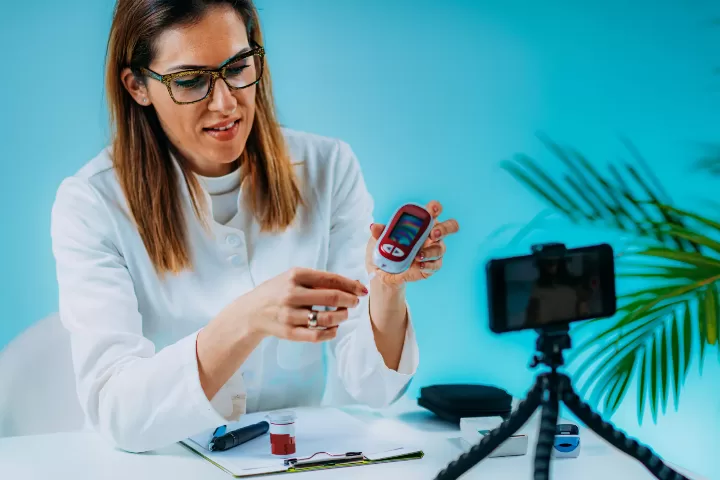
A remote consultation is very useful once the patient has already started on this path and had their first visit to the office. Interpreting the results of some analyzes can be done without problems through an online consultation, as can subsequent discussions related to following the diet.
For example, the patient can weigh or measure themselves at home, and during the video meeting, we can discuss the progress made, decide on further conduct, possible menu changes. Especially since the patient is more relaxed when he is in his own comfort, at home.
You can schedule an online consultation with Dr. Daniela Onu, here.