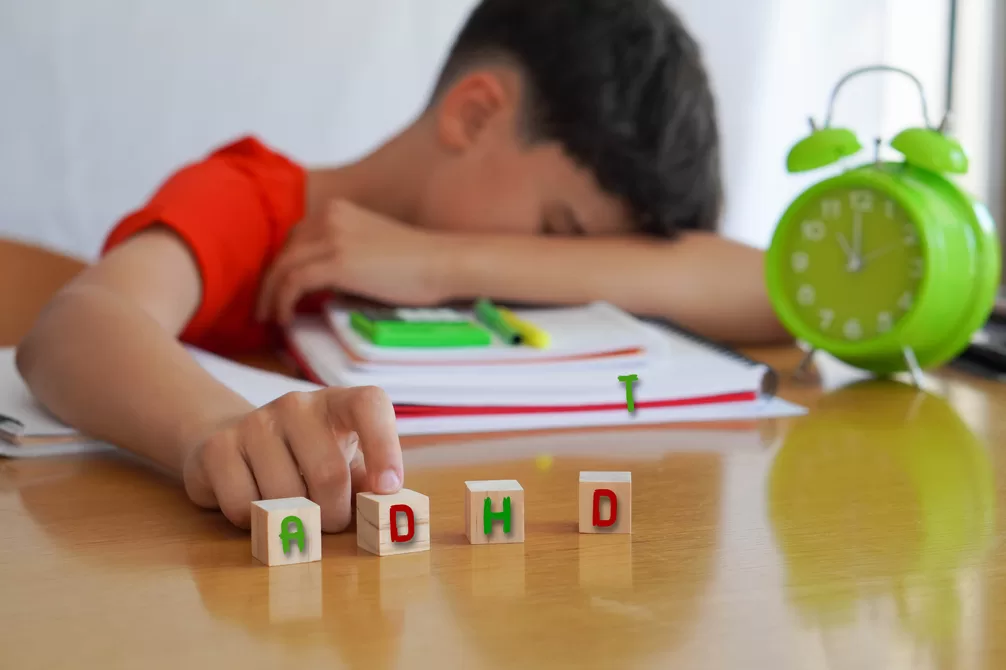
You watch your son running around the house with boundless energy. He climbs onto the sofa, jumps down, runs into another room, talks nonstop and when someone else tries to speak, interrupts them without even realizing it. At school, his teacher says the same thing: he doesn’t stay in his seat, he interrupts his classmates, forgets his homework, and struggles to finish what he starts. It seems as though nothing can slow him down.
In another home, a girl of the same age sits quietly in her seat, gazing out the window. No one complains about her behaviour. On the contrary, she is described as “a dreamer” or “a little shy.” But if you look more closely, you may notice that she works three times as hard as her classmates to get the same grades, finishes her homework much later, and checks everything obsessively because she is afraid of making a mistake.
The two pictures may seem completely different, but both can be manifestations of the same condition: ADHD.
In boys, the classic presentation is often easier to recognise: constant hyperactivity and movement, impulsivity, restlessness, excessive talking, and interrupting others, together with attention deficit. These characteristics may manifest as unfinished tasks, forgotten items, failure to follow instructions, and genuine difficulties with organization and self-management.
In girls, things can look quite different. Instead of obvious restlessness, there may be ”daydreaming”, a quiet form of inattention that is almost invisible and easily mistaken for timidity. Instead of overt impulsivity, many girls develop exhausting perfectionism or highly structured ways of doing things, working much harder than necessary simply to achieve the results their classmates reach with half the effort. Because they do not disrupt the people around them, these signs are often attributed to anxiety or the child’s naturally shy personality rather than to ADHD.
If you recognise several of these behaviours in your child, particularly if they were present before the preschool years, do not wait. An evaluation by a child and adolescent psychiatrist through Digital Clinics can provide clarity and, if necessary, an appropriate intervention plan tailored to your child.
The main reason why it is so important not to delay this step is that a child's brain has the greatest capacity to adapt during its early years of life. Early diagnosis and prompt intervention can fundamentally influence a child’s developmental trajectory by providing the necessary support during a period when time is on their side.